
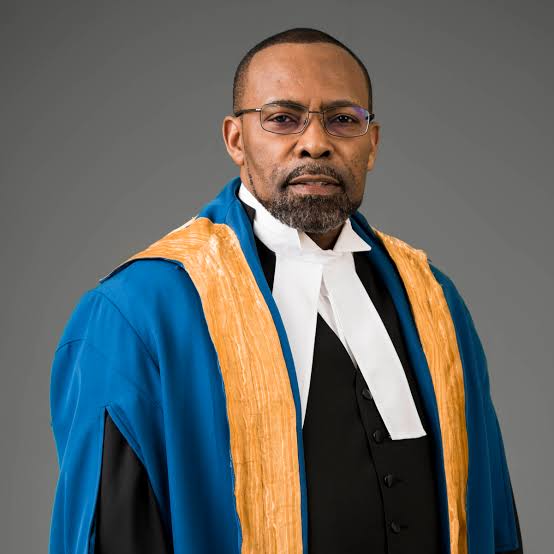
Caribbean Court of Justice President Justice Winston Anderson has broken his silence on allegations raised by fellow judges on the regional apex court, addressing the controversy in a media release issued Friday.
Anderson said recent press reports on the Court’s internal affairs have caused “concern, anxiety and profound sadness” both within the institution and across the region. He condemned, in the strongest terms, the unauthorised disclosure and publication of confidential judicial correspondence, calling it damaging to trust in administration of justice and public confidence in the judiciary.
The CCJ President addressed four main allegations. On consultation, he said he has regularly convened meetings with judges and established an advisory committee, and denied ever refusing to engage colleagues on matters affecting the Court.
On the judicial dress code controversy, Anderson confirmed he removed a colleague judge from the interlocutory panel in the D’Almada v Trinidad and Tobago matter after the judge declined to commit to the Court’s established attire practice, insisting the decision was unrelated to the judge’s legal views and stressing the judge was later included in the full panel for the substantive hearing.
On the most serious allegation-that panels were manipulated to secure particular case outcomes-Anderson said this was “wholly untrue,” calling the claim “irresponsible, intellectually dishonest, injudicious and quite simply, malevolent.” He announced that, going forward, every judge will be required to sit on every panel unless excused for legitimate reason.
On claims he sought to influence judgments, including in the case involving Azruddin and Nazar Mohamed against the Minister of Home Affairs, Anderson said all seven judges reached complete unanimity in that matter and denied suppressing any judicial views.
Anderson also addressed his meetings with Guyana’s President and Leader of the Opposition-a reference to concerns previously raised publicly by former Opposition Leader Aubrey Norton- over the prolonged acting appointments of Guyana’s Chancellor and Chief Justice. Anderson said his sole concern was constitutional protection of judicial independence, not any political preference, though he acknowledged in hindsight it “may have been better” to have limited himself to public commentary, as his predecessors did.
Justice Anderson ended his statement by highlighting the Court’s continued casework over the past year and pledged the CCJ would keep discharging its duties “with independence, fairness and integrity.”
Since the allegations surfaced, there have been calls for an independent investigation, alongside expressions of continued support for the regional judicial body from bar associations and other stakeholders.