
by Mark Murray
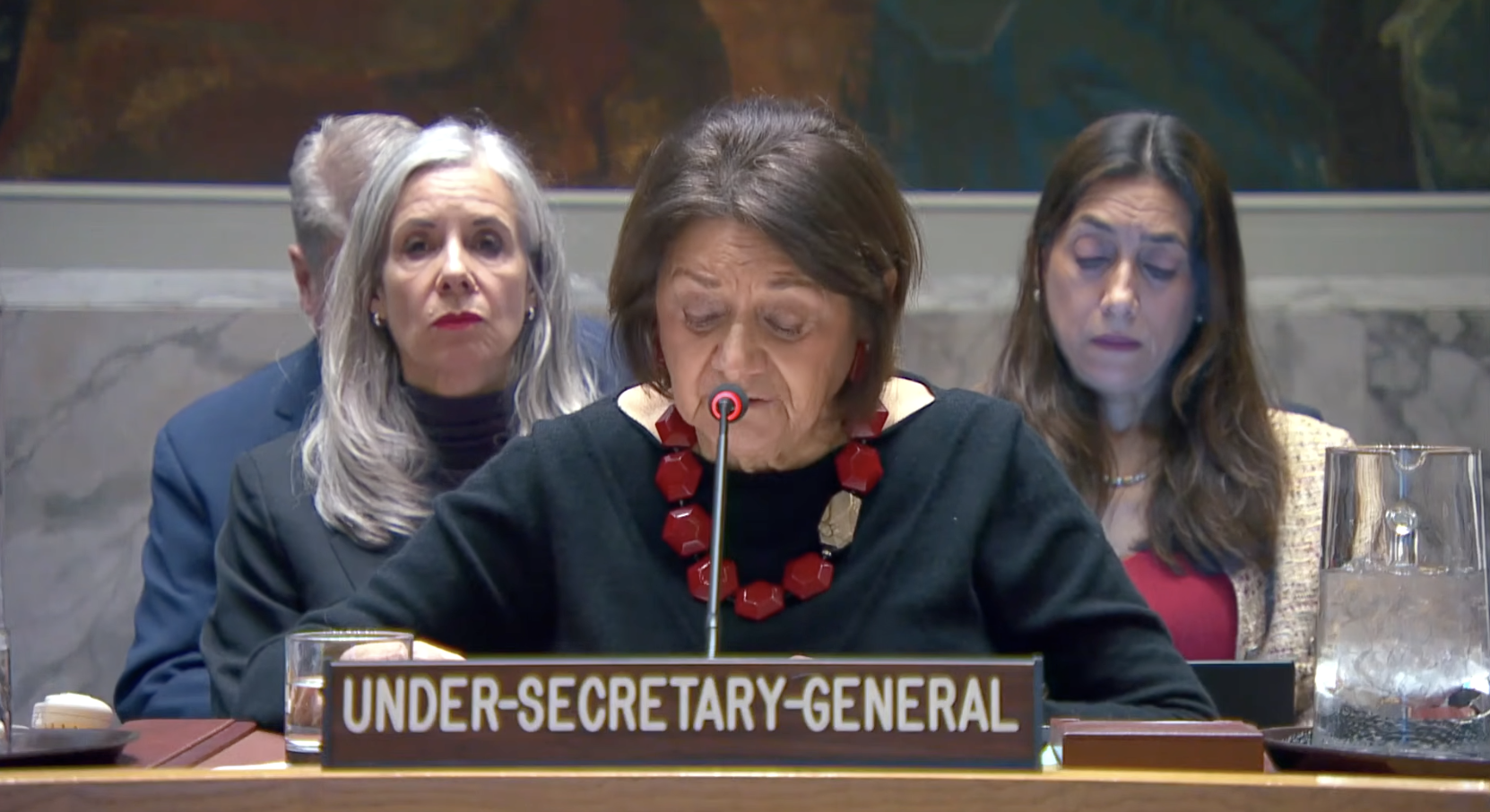
New York – On Monday, January 5, 2025, Rosemary DiCarlo, Under-Secretary-General for Political and Peacebuilding Affairs, delivered a statement on behalf of António Guterres, UN Secretary-General, addressing the Security Council regarding the recent events in Venezuela.
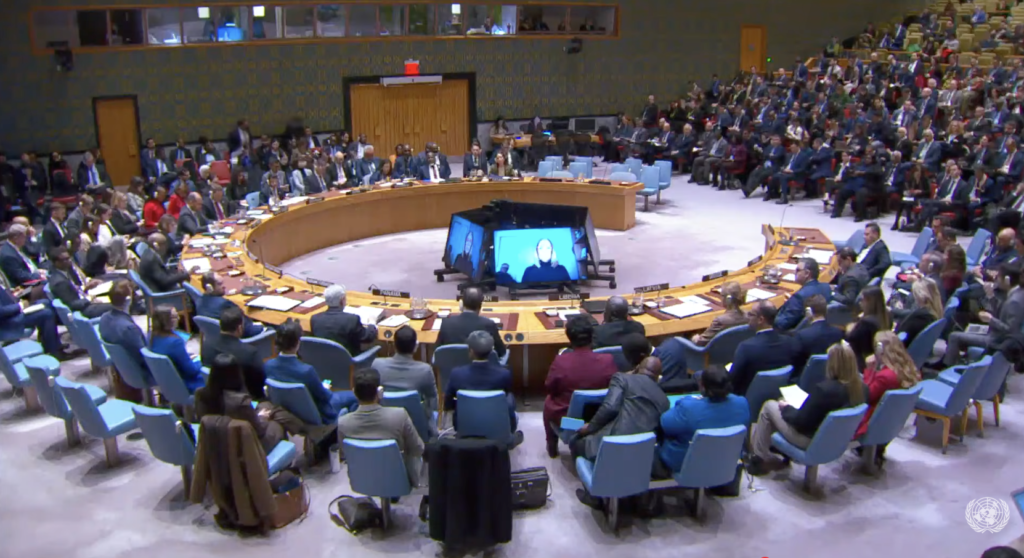
“We meet at a grave time following the 3 January United States military action in the Bolivarian Republic of Venezuela,” DiCarlo began, noting the severity of the situation.
She outlined the events, stating, “The broad outlines of the events of Saturday have been widely reported. Early that day, US forces were active across Caracas and in the northern states of Miranda, Aragua, and La Guaira. The extent of casualties resulting from these actions remains undetermined.”
Referencing the official position of the Venezuelan government, DiCarlo said, “The Government of Venezuela has characterized the United States action as a military aggression carried out in civilian and military areas, and as a flagrant violation of the Charter, posing a threat to international and regional peace and security.”
DiCarlo highlighted the uncertainty facing the country, remarking, “What is less certain is the immediate future of Venezuela. I am deeply concerned about the possible intensification of instability in the country, the potential impact on the region, and the precedent it may set for how relations between and among states are conducted.”
She emphasised ongoing concerns, adding, “The situation in Venezuela has been a matter of regional and international concern for many years now. Attention on the country only grew following the contested presidential elections in July 2024.”
On the electoral process, DiCarlo stated, “The panel of electoral experts I appointed at the Venezuelan Government’s request to accompany the elections highlighted serious issues. We have consistently called for full transparency and the complete publication of the results of the elections.”
She recalled her previous briefing to the Council, noting, “As we reported to the Council on 23 December, the Office of the High Commissioner for Human Rights has catalogued serious violations.”
DiCarlo drew attention to the escalation, saying, “The latest developments follow a period of heightened tensions, beginning in mid-August, as discussed in this Council on two previous occasions.”
She stressed the importance of international law, declaring, “I have consistently stressed the imperative of full respect, by all, for international law, including the Charter of the United Nations, which provides the foundation for the maintenance of international peace and security. I remain deeply concerned that rules of international law have not been respected with regard to the 3 January military action. The Charter enshrines the prohibition of the threat or use of force against the territorial integrity or political independence of any state. The maintenance of international peace and security depends on the continued commitment of all Member States to adhere to all the provisions of the Charter.”
Commenting on Venezuela’s ongoing crises, she said, “Venezuela has experienced decades of internal instability and social and economic turmoil. Democracy has been undermined. Millions of its people have fled the country. The situation is critical, but it is still possible to prevent a wider and more destructive conflagration.”
DiCarlo issued a call for unity: “I call on all Venezuelan actors to engage in an inclusive, democratic dialogue in which all sectors of society can determine their future. This entails the full respect of human rights, the rule of law and the sovereign will of the Venezuelan people. I also urge Venezuela’s neighbours, and the international community more broadly, to act in a spirit of solidarity and in adherence to the principles, laws and rules erected to promote peaceful coexistence. I welcome and am ready to support all efforts aimed at assisting Venezuelans in finding a peaceful way forward.”
She concluded with a reminder, “In situations as confused and complex as the one we now face, it is important to stick to principles. Respect for the UN Charter and all other applicable legal frameworks to safeguard peace and security. Respect for the principles of sovereignty, political independence and territorial integrity of states. The prohibition of the threat or use of force. The power of the law must prevail. International law contains tools to address issues such as illicit traffic in narcotics, disputes about resources and human rights concerns. This is the route we need to take.”