
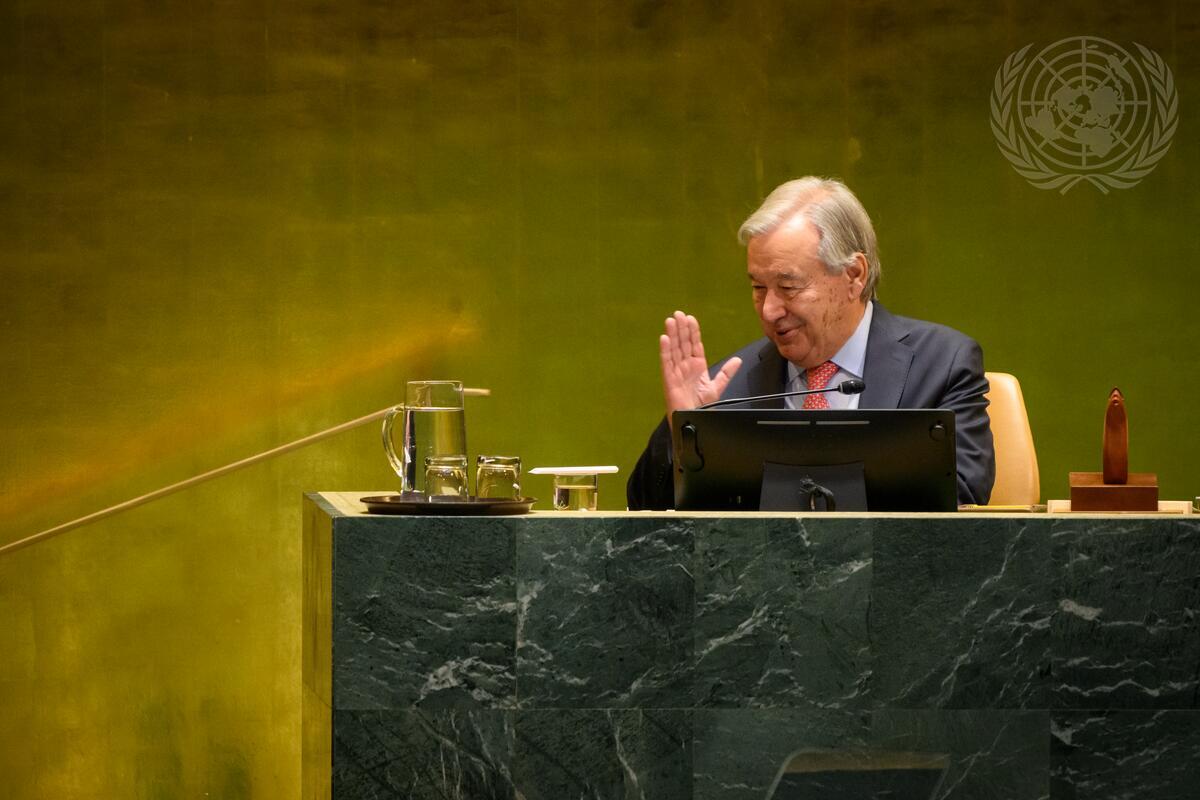
NEW YORK — In one of his last major addresses as UN Secretary-General, António Guterres told world leaders at the opening the 81st session of the General Assembly on Monday that global “cracks have become canyons,” framing today’s overlapping crises as fundamentally a contest over how power is used and governed.
With about 100 days left in his decade-long tenure, Guterres said power is being reshaped in three ways: new centers of influence are emerging among states, authority is shifting from governments to private corporations and individuals, and humans are increasingly ceding control to machines. He warned that global institutions still reflect “the power realities… of a largely bygone era.”
The Secretary-General said the world is moving irreversibly toward multipolarity, but cautioned it could take a fractured, transactional form or a “networked” one built on shared rules. He urged even the most powerful states to recognize that “their power isn’t so super. Their power has limits.”
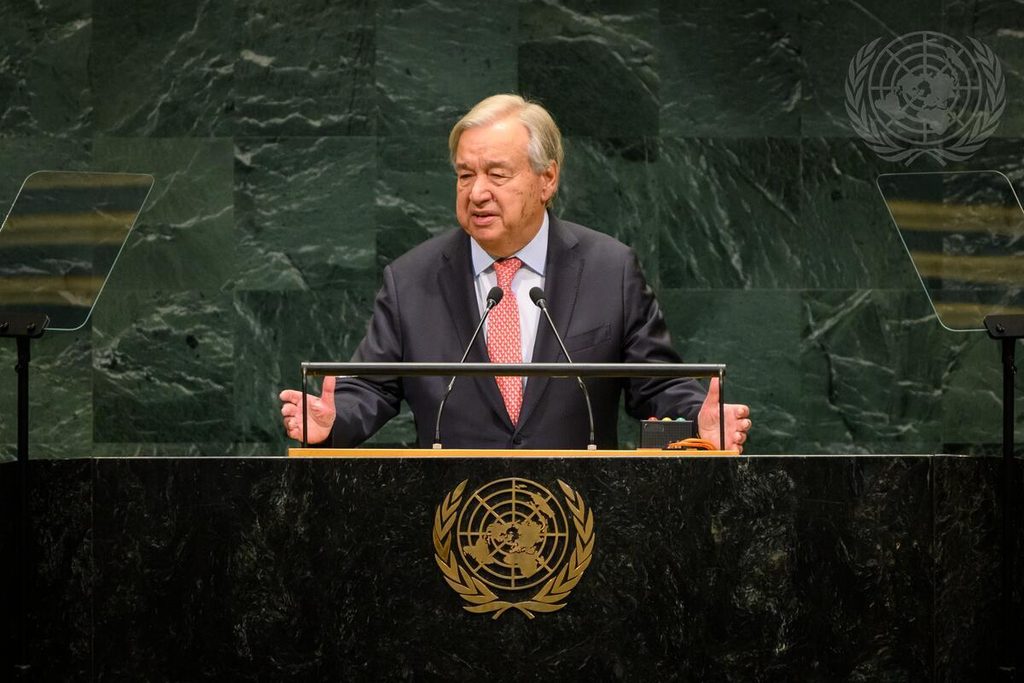
Guterres structured his remarks around four “great tests of power”: war and peace, inequality, climate, and artificial intelligence.
On security, he pointed to the Middle East, saying “so-called ceasefires have amounted to little more than ‘lesser fires'” and that “enough is enough,” urging leaders to use the high-level week to push for de-escalation. He renewed calls for compliance with International Court of Justice rulings on Gaza and warned that settlement expansion in the West Bank risks extinguishing the two-state solution. He also cited Russia’s invasion of Ukraine, the war in Sudan and unrest in Myanmar. On Security Council reform, he singled out the continued absence of permanent African representation as “unjust and indefensible,” noting most of Africa was still under colonial rule when the UN was founded.
On inequality, which he described as fundamentally a question of “who gets a chance, who has access to resources, who has a say,” Guterres called for reform of the international financial system, including debt relief and stronger multilateral development banks. He pointed to the UN’s recent achievement of gender parity across senior leadership as proof institutional change is possible: “Equality is not a dream. It is a decision.”
On climate, he said the world faces a “near-certain” breach of the 1.5°C threshold, but noted falling renewable energy costs as a hopeful shift in global power. He criticized major oil companies for pocketing “nearly half a trillion dollars” in profits since Russia’s invasion of Ukraine, compared with just $34 billion in international public adaptation finance, arguing “polluters must pay.”
On artificial intelligence, Guterres said the danger lies not in the technology itself but in “technology without accountability: capability without oversight, decision-making without transparency.” He called for a multilateral AI risk-management framework and said “killer robots must have no place in our future,” adding that children must never become “test subjects for unregulated systems.”
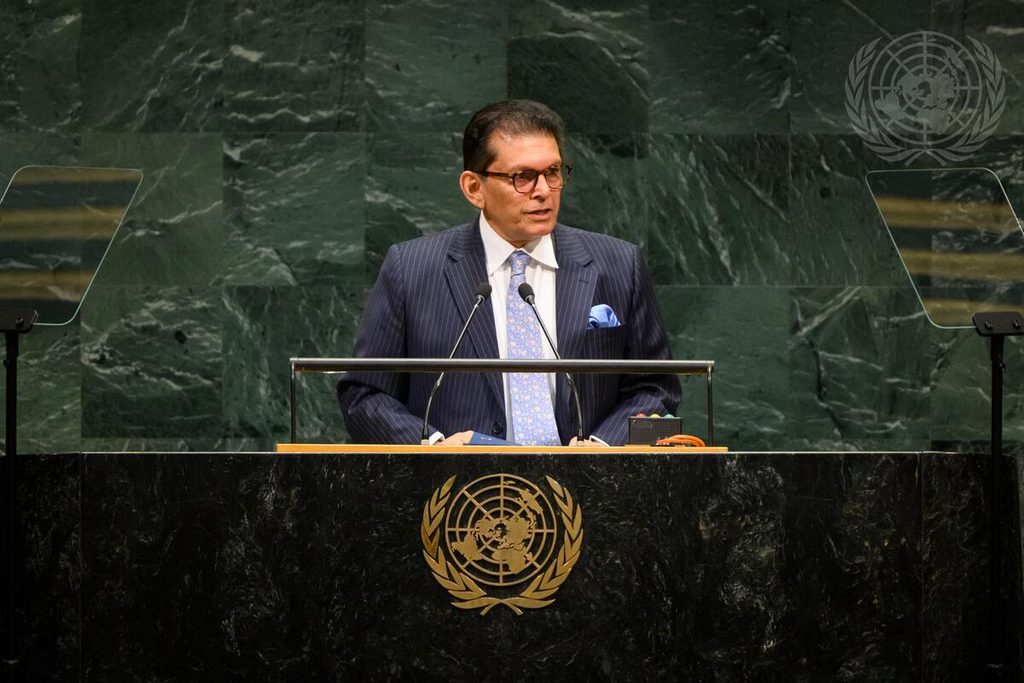
General Assembly President Khalilur Rahman echoed the sense of urgency, telling delegates that “people are not asking whether the United Nations still exists. They are asking whether it works,” and calling on member states not to “turn a blind eye” to where the institution has fallen short.
Closing his address, Guterres said his central conviction after a decade in office is that peace is possible and that “the power of law must prevail over the law of power,” pledging to keep championing those principles after leaving office on January 1.