
By Mark Murray
Georgetown, Guyana/Rio de Janeiro, Brazil, 27 July 2026 – Funding for the global HIV response plunged in 2025, driven entirely by a steep decline in US support, putting decades of progress against the epidemic at risk. That was the stark message from new reports by UNAIDS and KFF, released today as AIDS 2026, the 26th International AIDS Conference, opened in Rio de Janeiro.
Convened by the International AIDS Society (IAS), the conference has brought together approximately 7,000 scientists, policymakers, healthcare providers, funders and people living with and affected by HIV from around the world.
At a press briefing ahead of the opening session, global health leaders called on donor governments to sustain robust support for the HIV response, and urged low- and middle-income countries to continue stepping up their own investments where possible.
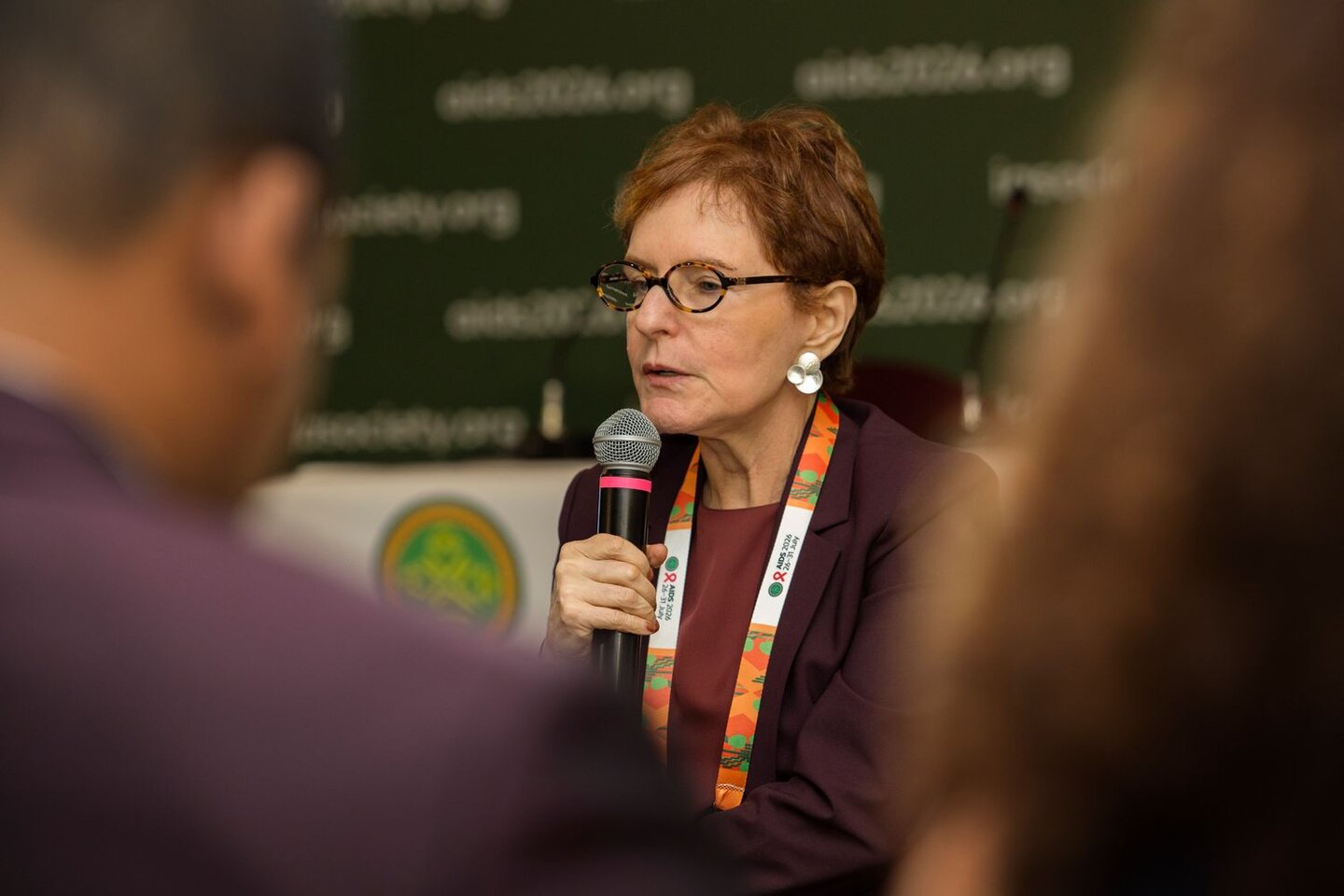
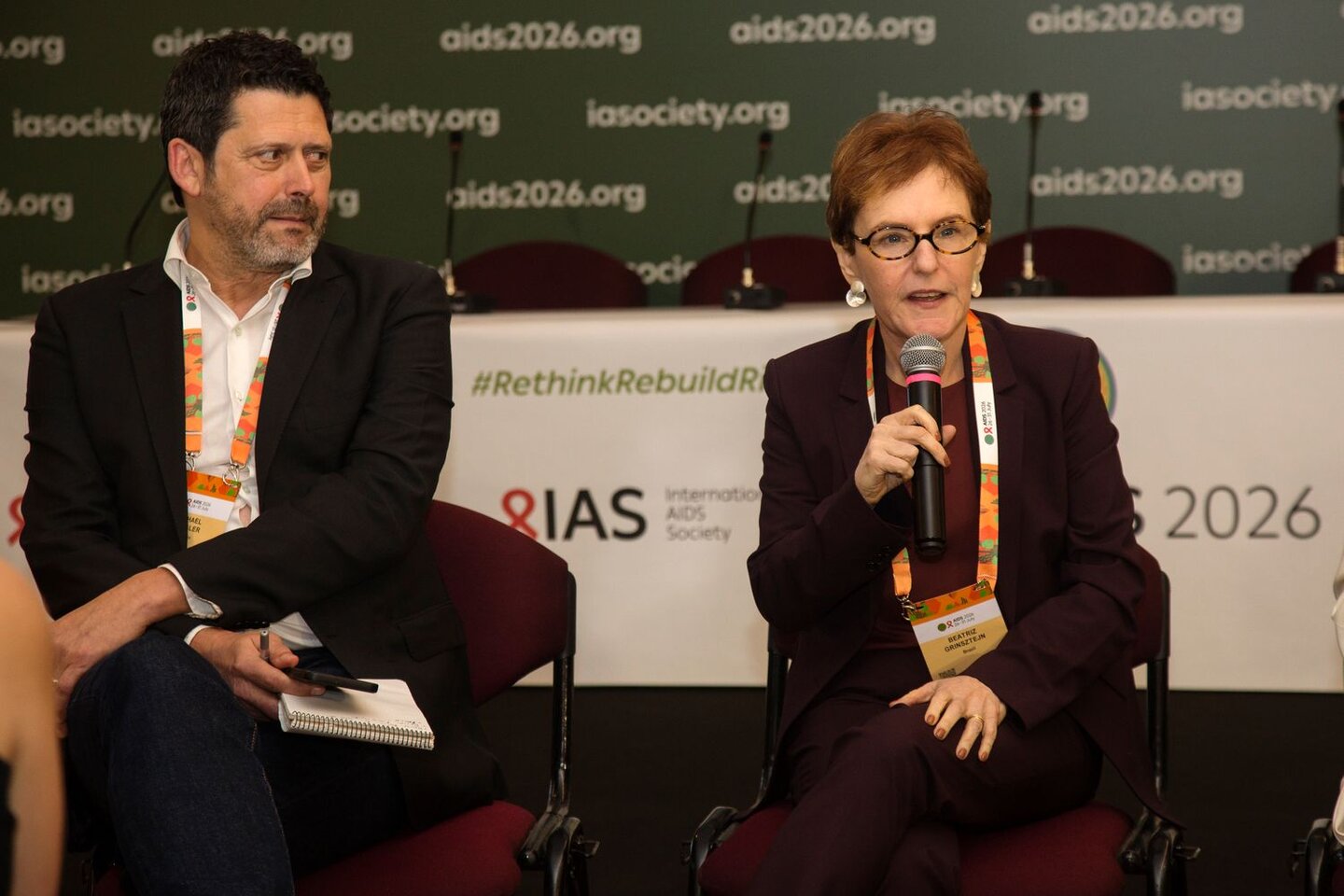
“We come to Rio de Janeiro at a moment of real danger for the HIV response,” said Beatriz Grinsztejn, IAS President and AIDS 2026 International Co-Chair. “Never has donor funding fallen so far, so fast, and those most vulnerable are already paying the price. Donor countries are choosing to walk away while many high-burden countries remain shackled by debt they cannot escape. We must rethink outdated models, rebuild what has been broken, and rise to ensure the response gets the resources it needs.”
The first report, from KFF and UNAIDS, found that the 25 percent decline in donor government funding marks the largest single-year drop since international funding scale-up began, driven by funding delays and project cancellations tied to changes in the US global health response last year.
A second report, from UNAIDS, published alongside the analysis, found a partial offset: domestic HIV financing increased by 4 percent in 2025, now accounting for nearly 60 percent of total HIV funding, as countries worked to offset declines in international support. More than 55 countries have committed to increasing domestic HIV investments in 2026.
The reports also found that in 2025 there were 1.2 million new HIV acquisitions and 570,000 AIDS-related deaths worldwide, as the world fell short of its global AIDS targets. New HIV acquisitions are rising in a number of countries, including Brazil, Pakistan, the Philippines and Madagascar. At the same time, countries such as Kenya, Lesotho, Rwanda, Zimbabwe and Eswatini continue to make progress toward the 2030 targets despite an increasingly difficult funding environment.
Taken together, the two reports show a global HIV response under more severe strain than at any point since the funding scale-up began in 2002.
UNAIDS Executive Director Winnie Byanyima said countries “cannot wait, and they cannot go backwards,” calling for urgent reform of the global financial system and faster debt restructuring so governments can invest in health, education and their people’s futures.
Erika Castellanos, Executive Director of Global Action for Trans Equality (GATE), said the response must be funded “like lives depend on it, because they do.” She said people living with HIV are not “a line item in a budget” and called for communities to be included directly in funding decisions rather than informed of them afterward.
Mathume Joseph “Joe” Phaahla, South Africa’s Deputy Minister of Health, said African countries must continue to strengthen domestic investment and treat HIV as a national priority, while stressing that no country can replace the scale of international partnership that has driven the global response for decades. Ending the epidemic, he said, will require “stronger domestic financing, sustained international support and shared responsibility.”
WHO Director-General Tedros Adhanom Ghebreyesus struck a note of cautious hope, noting that new acquisitions and AIDS-related deaths are at their lowest levels in more than three decades, and that ending AIDS as a public health threat by 2030 remains within reach. “But that progress is fragile,” he said. “We have the tools, the knowledge and the evidence to save lives and prevent new acquisitions. The challenge now is to sustain the commitment, investment and solidarity needed to reach every person who needs prevention, testing, treatment and care, and to finish the job.”
Jarbas Barbosa, Director of the Pan American Health Organization (PAHO) and WHO Regional Director for the Americas, said the science, tools and evidence needed to end HIV as a public health threat already exist. Through the Alliance for the Elimination of HIV in the Americas and the Path to HIV Elimination, he said, PAHO is supporting countries to accelerate action so that “no one is left behind.”
Brazil’s Minister of Health, Alexandre Padilha, welcomed the world to the first International AIDS Conference held in South America, pointing to Brazil’s history as one of the first countries to provide free HIV treatment to all who needed it. “Innovation without access is not an innovation,” he said. “It is an injustice.”
AIDS 2026 is taking place in Rio de Janeiro and virtually from 26–31 July 2026, with around 7,000 people expected to attend. First held in 1985, the International AIDS Conference is organized by the International AIDS Society and is billed as the world’s largest conference on HIV and AIDS, bringing together researchers, policymakers, healthcare professionals, people living with HIV, funders, media and communities.