

Guyana’s top financial and technology minds assembled on Wednesday, 11 February, at the Marriott Georgetown, responding to Newgen Software’s invitation to chart the future of artificial intelligence in banking and insurance. The event, billed as “The AI Decisioning Layer for Scaling Speed and Trust,” attracted senior representatives from GBTI, NALICO/NAFICO, Demerara Insurance, and the Indian High Commission, all seeking clarity on how AI could transform customer service without compromising transparency or control.
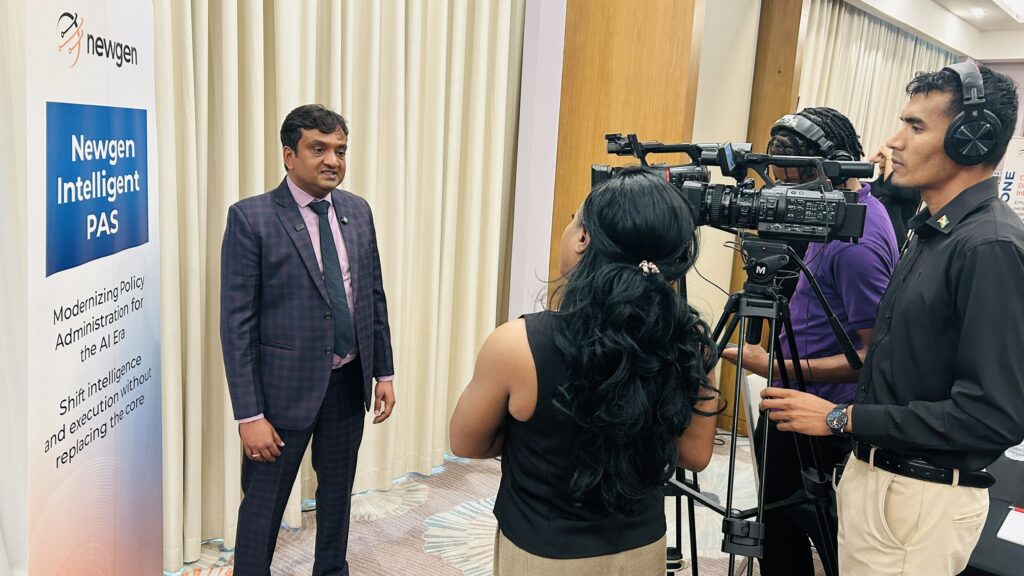
Manish Kumar Dugar, Head of Strategic Accounts (North Americas) at Newgen, steered the discussion, offering stark insights into the mounting pressures on today’s enterprises. “Customer expectations are rising continuously, while regulatory, risk, and operational complexities are increasing,” Dugar asserted, emphasising the multi-directional demands businesses now face—customers want instant service, regulators demand explainability, and operations struggle with fragmented systems. He told attendees, “AI today is no longer limited to automation. It has evolved into a core engine for decision-making at scale.” The critical question, Dugar noted, is whether AI-driven decisions meet the standards of accuracy, responsibility, and explainability demanded by modern business.
GBTI’s CEO, Shawn Gurcharran, and CTO, Randir Ramkissoon, weighed in on the challenges of legacy technology. As Guyana’s economy grows, so do customer demands for instant onboarding, rapid credit decisions, seamless policy changes, and proactive service. Both executives believe focus on content intelligence, enterprise-wide content architecture, and explainable AI—vital in regulated environments where trust is non-negotiable.
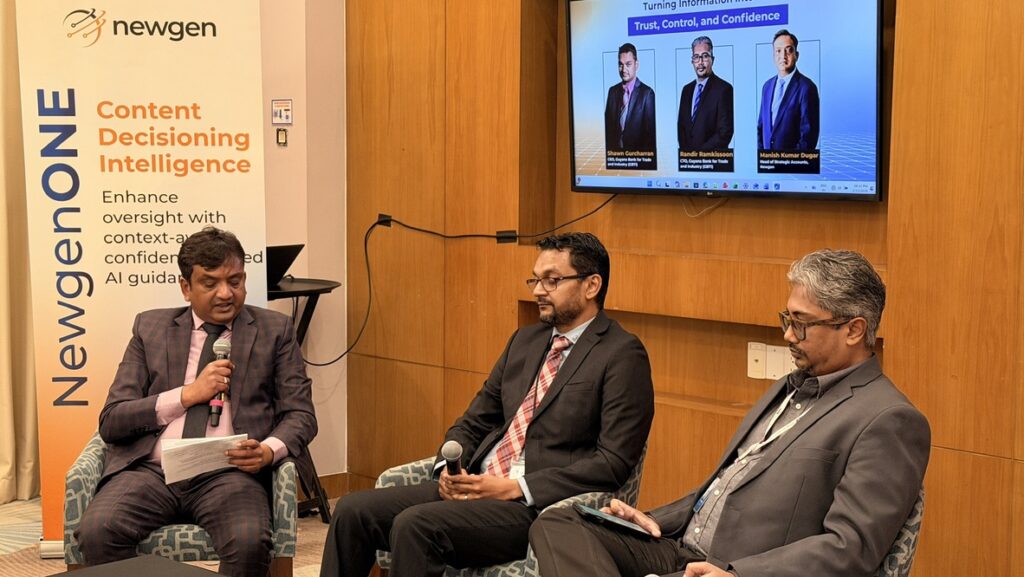
Dugar argued that digital transformation is no longer the main obstacle. Instead, the true advantage lies in embedding intelligence throughout the customer journey. He presented Newgen’s three pillars—content intelligence, communication intelligence, and data intelligence—as a blueprint for organisations aiming to deliver speed without losing control. “Customers expect their requests to be processed instantly. Regulators demand traceable, explainable, and auditable actions. The pressure is rising across the board,” Dugar reiterated, urging banks and insurers to reconsider how they make, monitor, and scale decisions.
Panelists exchanged practical strategies to modernise lending, onboarding, and insurance operations while minimising risk. They concluded that strong guardrails—including policy frameworks, human oversight, monitoring mechanisms, model risk management, and explainability—must be in place before scaling AI. Audience feedback confirmed that many organisations are already piloting AI initiatives, but consensus held firm: robust governance must underpin any shift toward AI-driven decisioning.
As the forum wrapped, Dugar left financial leaders with a rallying cry: “Enterprises need speed, trust, and scalability—and the AI decisioning layer is where all three converge.” The roundtable signalled a turning point for Guyana’s banking, financial services, and insurance sector, marking a decisive move toward AI-powered transparency, resilience, and customer-centricity.